
From the 1918 Herbalist: A Datura, Arnica & Comfrey Root Preparation

Following the recipe from a 1918 book, "The Herbalist." Written by Joseph E. Meyer.
He wrote extensively on the medicinal and folklore uses of herbs.

Datura Salve: A Historical Herbal Preparation
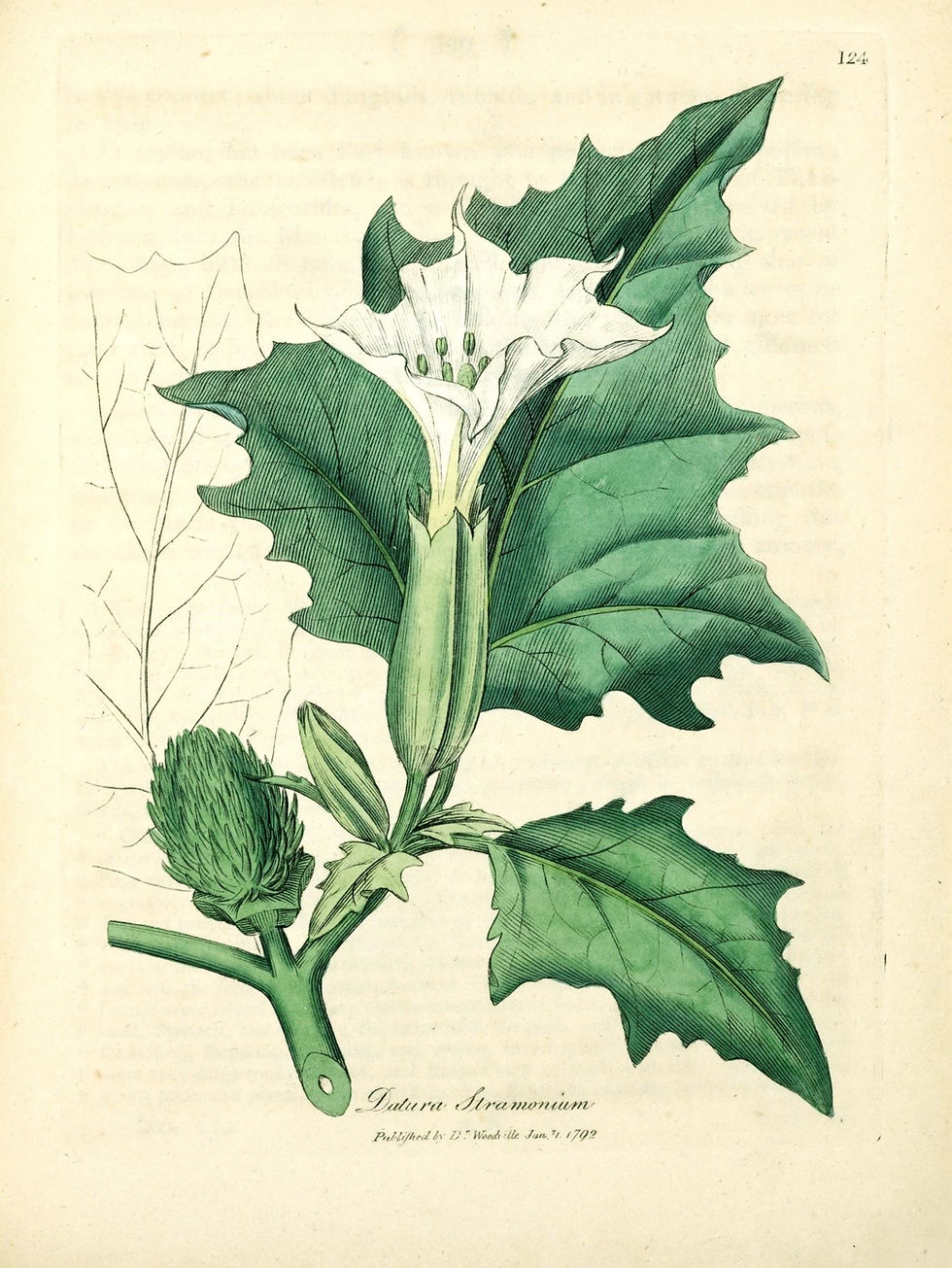
Datura is a plant with a long and complicated history in traditional medicine, folklore, and herbal literature.
While researching historical herbal preparations, I came across a recipe for datura salve in the 1918 book The Herbalist, written by Joseph E. Meyer. Meyer wrote extensively about the medicinal and folkloric uses attributed to herbs and plants during his time.
Historical herbal texts can offer a fascinating glimpse into how people understood and worked with plants more than a century ago.
But historical use does not necessarily mean that a preparation is safe by modern standards.

Datura Pain Relief Salve
This salve can be applied to bumps and bruises and used to relieve strained and sore muscles.
Ingredients:
3 TBSP Datura Seeds
1/2 oz Arnica
1/2 oz Comfrey Root
1 cup carrier oil of your choice (I used avocado oil)
1/4 cup beeswax
Instructions:
Make sure all plant material is completely dry before beginning the infusion.
Combine the dried datura seeds, arnica flowers, and comfrey root with your chosen oil in a slow cooker or double boiler. Warm over medium heat and allow the mixture to infuse for approximately 4 hours.
Once the infusion is complete, carefully strain out all of the plant material.
Return the infused oil to gentle heat and add the beeswax. Continue warming until the beeswax has completely melted and the mixture reaches your desired consistency.
Pour the finished preparation into a clean jar and allow it to cool completely before use.
Safety: Do not apply this preparation to broken, irritated, or open skin. Because datura contains potent toxic alkaloids and can cause poisoning through exposure, preparations containing datura should not be made or used casually. Keep away from children and pets and avoid contact with the eyes, mouth, and other mucous membranes.

Datura in Historical Herbalism
Species of Datura have been associated with medicinal, ritual, and folkloric practices in different cultures for centuries.
Historically, preparations made from datura were sometimes described for external or internal use. Older herbal texts often contain remedies that reflect the medical knowledge and practices of their era.
Today, we know that datura contains tropane alkaloids, including atropine and scopolamine. These compounds can have powerful effects on the nervous system and can cause serious poisoning.
That makes datura very different from many of the gentler herbs commonly discussed in home herbalism.
A Recipe From 1918
Meyer’s The Herbalist, published in 1918, includes a historical preparation for datura salve.
Rather than reproducing the preparation as a modern how-to recipe, I’m sharing it here as an example of historical herbal practice.
Old herbal recipes can be valuable primary sources for understanding how plants were viewed, prepared, and used in earlier generations. They can also remind us how much herbal and medical knowledge has changed over time.
Historical documentation is not the same as a recommendation for use.
Why Historical Herbal Recipes Require Context
When reading older herbal books, it’s important to remember that the authors were working with the knowledge, terminology, preparation methods, and safety standards available at the time.
Some historical preparations remain interesting from a cultural or botanical perspective. Others involve plants or methods that we now understand can be dangerous.
Datura falls firmly into the category where additional caution is necessary.
Its potent alkaloids can produce effects such as confusion, delirium, hallucinations, rapid heart rate, overheating, seizures, and other potentially life-threatening toxicity.
Because of this, datura should not be treated like an ordinary culinary or home herbal ingredient.
Learning From the Past
Studying historical herbalism isn’t about assuming that everything our ancestors did was either right or wrong.
It’s about understanding the relationship people had with plants, how remedies were traditionally prepared, and how our understanding of plant chemistry and safety has developed.
Books such as Meyer’s The Herbalist give us a window into that history.
They also provide an opportunity to ask important questions:
● How was a particular plant traditionally used?
● What did historical herbalists believe about the plant?
● How was it prepared?
● What do we know about its chemistry today?
● How does modern safety information change the way we approach that historical knowledge?
For me, that’s one of the most interesting parts of studying herbalism.
We can appreciate the knowledge preserved in historical texts while also bringing modern safety information into the conversation.
A Note About Datura
Datura is poisonous and should not be prepared or used as a home remedy.
This article discusses the historical record and is not an instruction or a recommendation to make or use datura salve.
If you encounter datura and believe someone has been exposed to or has ingested it, seek immediate medical or poison-control guidance rather than attempting to treat the exposure with another herbal preparation.
Historical herbalism is worth studying, but it should be studied with context, curiosity, and respect for the potency of the plant.
Continue Exploring October in the Apothecary
Poisonous Plants, Medicine & Myth
Old plants, strange histories, medicine, mythology, folklore, and the stories humans have woven around the botanical world.
Comments