
Nettle (Urtica dioica)

Updated: 4 hours ago
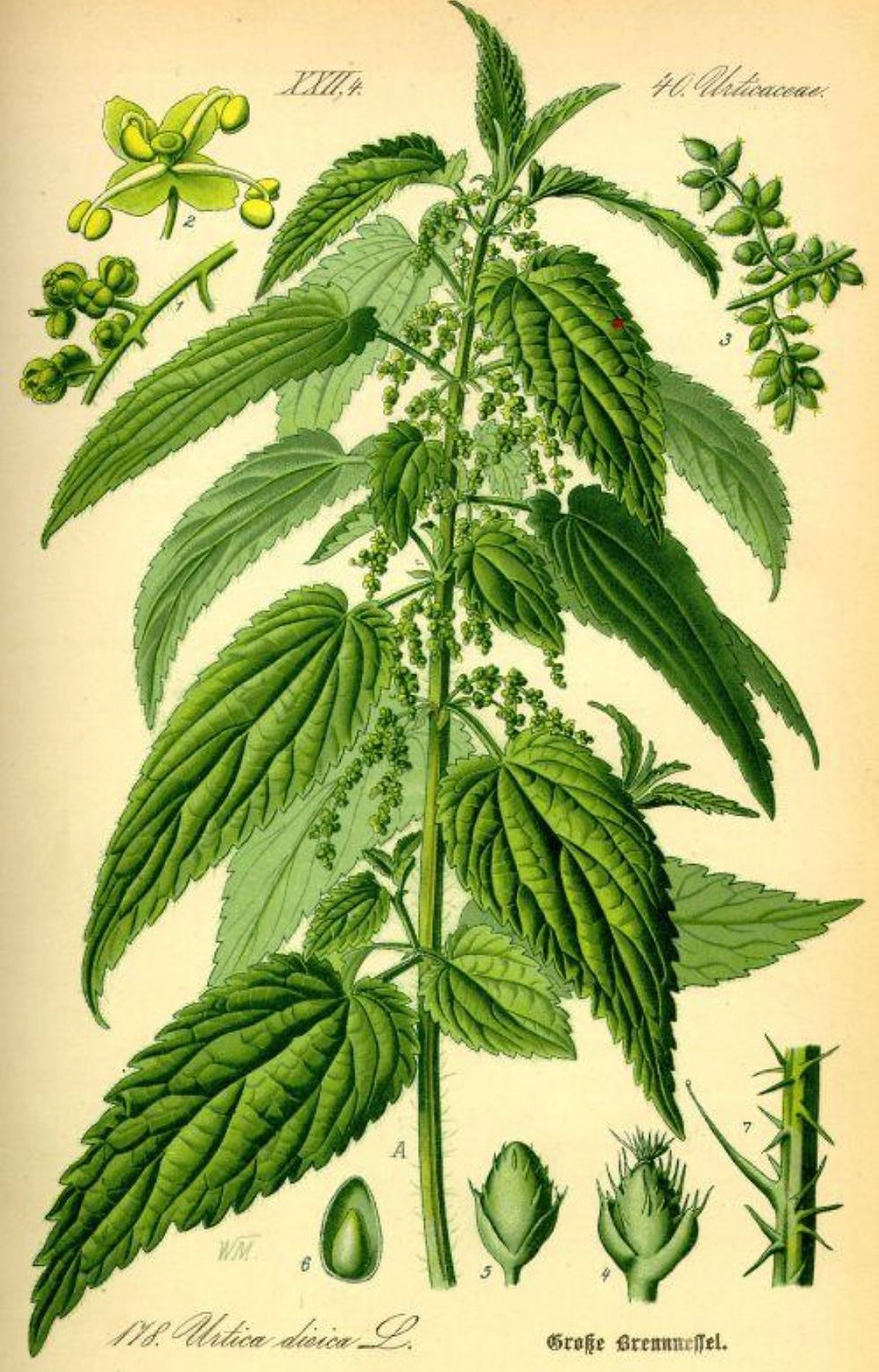
Plant Family & Name:
a. Urticaceae
b. The genus name Urtica comes from the Latin verb urere, meaning "to burn", which implies the stinging sensation that is felt when this plant is handled. The species name dioica means 'two houses' because the plant usually contains either male or female flowers and requires exposure to others in order to reproduce by seed. A poetic bit about the name is also that the leaf is useful as a blood builder and nutritive tonic in pregnancy and that the root is supportive for prostate health. I see this as a supporter of fertility for the "two houses" of humans (male & female).
Habitat & Ecological role:
This plant flourishes in temperate climates, and is commonly found in the understory of riparian ecosystems (along rivers, lakes, and streams). Nettle thrives in areas of disturbance by either natural or human influences, and is performing the important roles of bioremediating and stabilizing these areas. Nettle's roots pull minerals from deep in the soil into their tissues where they leave them for the next generation of plants to utilize. They also pull heavy metals into their tissues to get them out of the soil. Lastly, they create large rhizomatous mats that create stability and prevent erosion. They are filtering and stabilizing.
Herbal Actions: astringent, anti-inflammatory, blood sugar amphoteric, diuretic, tonic, hypotensive, local analgesic, galactagogue, antirheumatic, antiallergenic, antihistamine, nutritive, kidney tonic, and styptic.
Parts used: Every part of the nettle plant is used in some way. Leaves are used topically or internally as teas or food, seeds are used nutritionally and as a diuretic, and the root is used to treat symptoms of benign prostatic hyperplasia (Upton, 2009). Traditional uses of the stalks are also as a fiber plant for clothing, rope, baskets, and bedding.
Season: Early to Mid Spring (aerial parts are harvested prior to seed stage)
Taste: Astringent, Sweet, Salty
Energetic Qualities: Cooling, dry/moistening (amphoteric), mobile, light/heavy (amphoteric)
Indications: Nettle is indicated in any condition that could use good nutritional support as well as for myalgia, osteoarthritis, eczema, hemorrhage, allergies, urinary tract issues, anemia, and hypoglycemia/hyperclycemia (amphoteric) (Mills & Bone, 2005; Upton, 2009). "When in doubt, use nettles!"
Body system affinities: Urinary, cardiovascular, musculoskeletal, integumentary, immune
Nutrition: Excellent source of Iron, Magnesium, Calcium, Flavanoids, Phenolics, Fatty Acids, Protein, Vitamin C, B vitamins, Phosphorous, Potassium
Key Points: filtering, stabilizing, restorative, tonic, nutritive springtime medicine!


Comments