
Carolina Horsenettle: The Devil’s Tomato, the Poisonous Potato, and a Plant with a Complicated Past

There are plants that announce themselves.
Then there are plants that hide their danger behind something that looks almost ridiculously innocent.
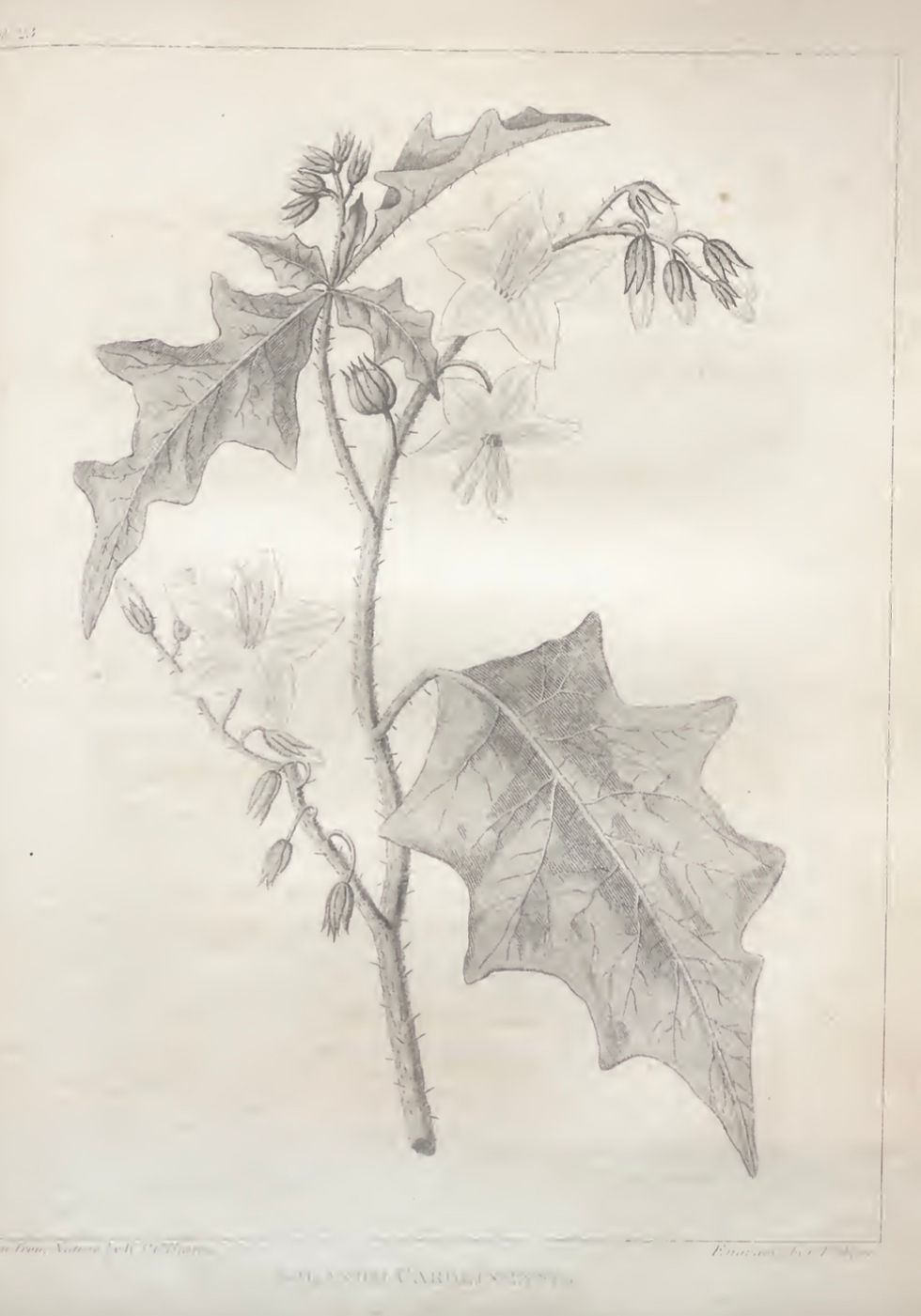
Carolina horsenettle is one of the latter. In late summer and autumn, Solanum carolinense produces little round fruits that begin green and eventually turn yellow as they ripen. They look like miniature tomatoes or, to my eye, tiny green watermelons hiding among the grass. But this is no tomato. It is a nightshade, and its history is far more complicated than its deceptively familiar appearance might suggest.
Throughout its history, Carolina horsenettle has occupied an interesting place somewhere between poison, medicine, nuisance, folklore, and food for wildlife. It has been called Carolina horsenettle, horsenettle, bull nettle, ball-nettle, sand brier, devil’s tomato, devil’s potato, wild tomato, poisonous potato, and even apple of Sodom. Modern taxonomic references recognize Solanum carolinense L. as its accepted scientific name. The plant’s many common names offer a glimpse into the different ways people have encountered, interpreted, and remembered it. North Carolina State University Extension
For a poisonous-plant series, it is almost too perfect.
Not Actually a Nettle
Despite its common name, Carolina horsenettle isn’t a true nettle. It belongs to the Solanaceae, or nightshade family, the same large botanical family that includes tomatoes, potatoes, peppers, eggplants, and deadly nightshade. That family resemblance helps explain some of its appearance, particularly its star-shaped flowers and round, fleshy berries.
Carolina horsenettle can look surprisingly ordinary until you get close enough to discover its prickles. The plant has sharp projections along its stems and on the veins of its leaves, particularly on their undersides. Those prickles make names such as bull nettle and tread-softly seem entirely reasonable. This is a plant that rewards careful observation rather than casual handling.
A perennial herb, Carolina horsenettle spreads through underground rhizomes as well as seeds. Once established, it can form persistent colonies in pastures, cultivated fields, roadsides, and other disturbed areas. Its ability to spread and regrow makes it a troublesome weed in agricultural settings, while its prickly stems offer an additional reason to give it space. North Carolina State University Extension
It’s the sort of plant that makes the old advice about paying attention to what you’re stepping on seem particularly reasonable.
A Carolina Plant, at Least by Name
Carl Linnaeus formally described Solanum carolinense in 1753, publishing the species in Species Plantarum. The name carolinense is geographic, meaning essentially “of Carolina,” and reflects the plant’s association with that region. Its native range, however, is considerably broader than its name might suggest.
Modern botanical references document the species across much of the eastern and central United States, extending into parts of Canada and Mexico. It has also been introduced beyond its native range. Carolina horsenettle is therefore not exclusive to the Carolinas, even if its name gives that impression. Kew Science, Plants of the World Online
The name connects the plant to the history of botanical classification: a regional association became part of its permanent scientific identity. It is a small reminder that scientific names can preserve historical geography even when a species grows far beyond the place that inspired its name.
Where Did “Horsenettle” Come From?
This is one place where I’d resist giving you a tidy folk explanation as though it were proven.
Numerous historical common names have been recorded for S. carolinense, but the sources available do not establish one definitive origin for the word “horse” in horsenettle. What we can say with confidence is that the name has been used in botanical and agricultural literature for generations. Historical medical and botanical references also list names such as bull nettle and sand brier.
The “nettle” portion makes intuitive sense when you encounter the plant’s prickles. The “horse” portion is harder to pin down with certainty. Without a reliable historical source explaining the name’s origin, it is better to acknowledge that uncertainty than to repeat a plausible-sounding story as established folklore.
And that’s actually an interesting part of botanical history in itself. Plants often acquire common names long before anyone records precisely why those names were chosen. A name can survive for centuries even when its original meaning becomes difficult to recover.
“Devil’s Tomato”
That name needs very little explanation.
The fruits look tomato-like. The plant is poisonous. And the stems are armed with prickles.
“Devil’s tomato” is one of the recorded common names for Carolina horsenettle, alongside devil’s potato and poisonous potato. These names are particularly striking in a family where edible and poisonous plants can look remarkably similar to the untrained eye.
A tomato belongs to Solanum. A potato belongs to Solanum. Carolina horsenettle belongs to Solanum.
But family resemblance is not permission to taste-test the neighborhood.
The resemblance is botanically interesting, but it should never be mistaken for evidence that the fruits are edible. Carolina horsenettle is poisonous to people and livestock, and its berries should not be eaten. North Carolina State University Extension
And Then There’s “Apple of Sodom”
This is one of my favorite names attached to the plant, but it is also one that deserves a little caution.
“Apple of Sodom” is recorded as a common name for Carolina horsenettle in modern botanical references. The complication is that the name has also been applied to other plants, including species unrelated to S. carolinense. Consequently, a historical story about an “Apple of Sodom” cannot automatically be attributed to Carolina horsenettle simply because the name appears in a modern list of its common names.
This is where plant folklore can become tangled. Common names are not standardized in the same way as scientific names. They can vary between regions, overlap across species, and change meaning as stories move between communities and generations.
A name travels. The story travels with it. Eventually, the plant itself can change.
That is why botanical identification matters when researching folklore. A compelling story may be genuinely old and culturally significant, yet still be attached to the wrong species in a modern retelling.
Indigenous Knowledge and Traditional Medicine
Carolina horsenettle appears in historical accounts of traditional medicinal plant use, including references to Native American practices and the knowledge of early settlers. North Carolina State University Extension summarizes some of these historical uses, while regional ethnobotanical publications provide a broader context for understanding the relationships between Indigenous communities and local plants.
This is an area where respectful precision matters. There was never one universal “Native American use” of horsenettle. Indigenous nations have distinct languages, histories, landscapes, and medicinal knowledge systems. A use documented for one community cannot automatically be attributed to another.
When a historical source identifies a particular nation or community, that specificity should be preserved. When the evidence is less precise, the writing should acknowledge that limitation rather than presenting a broad claim as though it represented everyone.
It is also important to distinguish a documented medicinal tradition from proof that a treatment was effective or safe. Ethnobotanical records tell us about human knowledge, cultural practices, and relationships with the natural world. They deserve to be studied carefully, with attention to both the historical record and the communities whose knowledge is being described.
A Poisonous Plant That Became a Medicine
This is where the history of Carolina horsenettle gets particularly strange.
Although the plant is poisonous, historical physicians and herbal practitioners experimented with preparations made from it. Older medical literature records the use of its roots and berries, associating them with conditions including convulsions, epilepsy, asthma, bronchitis, and tetanus. Some historical accounts also describe its use for skin complaints such as poison ivy irritation.
North Carolina State University Extension notes that Carolina horsenettle was listed in the United States National Formulary from 1916 through 1936. That is a remarkable detail when you consider that the plant is now more likely to be encountered as a prickly pasture weed than as a subject of pharmaceutical history. North Carolina State University Extension
Its appearance in a formal medicinal reference illustrates how differently people once approached botanical remedies. Plants were collected, prepared, administered, and evaluated within medical systems that did not always have the analytical tools or safety standards available today.
But historical medicinal use is not evidence of modern safety or effectiveness. A plant can have a long medicinal history and still pose serious risks. In some cases, the very biological activity that attracted the attention of historical practitioners may also have contributed to harmful effects.
The history is fascinating. It is not a recommendation to use the plant medicinally.
The Strange Story of Tetanus
One of the most remarkable chapters in the old medical literature concerns tetanus.
Nineteenth-century medical writers recorded reports of Solanum carolinense being used in cases of the disease. Historical dispensatories traced some of these claims through the work of South Carolina physician Francis Peyre Porcher and earlier European and American medical accounts. Porcher discussed the plant in his writings on the medicinal plants of South Carolina, preserving reports of its use that had circulated among earlier practitioners.
Later medical and homeopathic publications repeated claims about the plant’s use for convulsions, epilepsy, and tetanus. Some accounts described dramatic effects, including a case in which an excessive dose was reportedly followed by dangerous stupor. These reports reveal how seriously some historical practitioners regarded the plant’s physiological effects, but they do not establish that the treatment was safe or effective.
The distinction matters because tetanus is a serious, potentially life-threatening disease that requires modern medical care. Historical reports of a plant being used to treat it should be understood as evidence of past medical practice, not as support for attempting the treatment today.
There is also a revealing tension in these accounts. The same literature that describes the plant as a remedy contains warnings about the consequences of excessive dosing. The boundary between a desired effect and a dangerous one was not always easy to establish.
That is one of the enduring lessons of historical herbal medicine: the fact that a substance produces a noticeable effect does not necessarily mean that the effect is beneficial.
A Troubling Piece of Historical Writing
Some nineteenth-century medical sources also recorded a claim that horsenettle had a reputation as an aphrodisiac among Black people in South Carolina. The statement appears in historical literature derived from Porcher’s work and was repeated in later medical publications.
It should be treated as a historical report, not as an established fact about an entire community. The surviving account does not justify assuming that the claim was universally held, widely practiced, or accurately represented by the writer who recorded it.
This is an important distinction when researching historical herbalism. Older botanical and medical books often combine direct observations, hearsay, therapeutic claims, cultural descriptions, and the biases of their authors. Their contents can be valuable, but they require critical reading.
Preserving the history does not mean repeating every claim without context. We can acknowledge what historical writers recorded while also examining the limits of their evidence and the social assumptions that shaped their accounts.
The history is worth preserving.
The stereotype isn’t.
The National Formulary Years
Carolina horsenettle’s appearance in the United States National Formulary between 1916 and 1936 marks an important period in its medicinal history. The formulary served as a reference for medicinal preparations, and the plant’s inclusion indicates that it had a recognized place in American medical practice at that time.
By the early twentieth century, however, medicine was changing rapidly. Pharmacology and pharmaceutical manufacturing were becoming increasingly standardized, and researchers were investigating the chemical constituents responsible for the effects of medicinal substances. Traditional botanical preparations faced growing scrutiny as medical practice placed greater emphasis on reproducibility, dosage control, and systematic evidence.
For plants with potentially serious toxic effects, these changes were especially important. A preparation whose composition varied with the plant material, growing conditions, or method of preparation could be difficult to administer consistently. When the margin between a desired physiological effect and harmful toxicity was uncertain, the risks became harder to justify.
The end of Carolina horsenettle’s listing in the National Formulary does not, by itself, tell us every reason its medicinal use declined. It does, however, place the plant within a broader history of changing medical standards and the gradual transformation of botanical medicine.
The Poison Behind the Pretty Berries
Carolina horsenettle’s fruits are among its most recognizable features. They begin green, resembling tiny tomatoes, and turn yellow as they mature. In an autumn field, the berries can look almost decorative, especially when they stand out against fading vegetation.
Their appearance, however, gives no indication that they are safe to eat.
Carolina horsenettle contains toxic steroidal glycoalkaloids and related compounds associated with its biological activity. Historical and modern botanical references identify the plant as poisonous to humans and livestock. Reported symptoms of ingestion can include nausea, vomiting, abdominal pain, diarrhea, weakness, and drowsiness; severe poisoning can be life-threatening. North Carolina State University Extension
Older toxicology literature also records serious poisoning associated with the plant’s fruits. Such reports underscore why its tomato-like appearance should never be interpreted as an invitation to taste them.
The fruits are not miniature watermelons. They are the berries of a poisonous nightshade.
Carolina horsenettle should not be used as a home remedy, and none of its parts should be eaten. Its prickles also make careful handling advisable, particularly when working around dense colonies of the plant.
Poisonous Doesn’t Mean Pointless
This is one of the themes I keep returning to when studying poisonous plants. Humans have a tendency to divide plants into tidy categories: food, medicine, weed, poison. Nature doesn’t work quite so neatly.
Carolina horsenettle can be poisonous to people and still have ecological value. Its flowers attract bumblebees and other insects, while mature fruits have been reported as food for wildlife, including quail and wild turkeys. The plant also provides a useful example of how a species can persist in disturbed habitats through its ability to spread underground and reproduce by seed. North Carolina State University Extension
Its prickles discourage some animals from feeding on it. Its extensive underground growth helps it survive disturbance. And its fruits carry seeds into the next generation.
The same characteristics that make Carolina horsenettle troublesome to a farmer can contribute to its persistence in the landscape. A plant does not have to be useful to humans to have a role in an ecosystem, and toxicity does not make a species inherently without value.
Understanding a poisonous plant means looking beyond the danger to consider its biology, ecology, and place in the landscape.
A Plant Made for October
There is something wonderfully appropriate about finding Carolina horsenettle in October. The stems are thorny, the leaves are rough, and in many places the flowers have faded. The little fruits, however, remain conspicuous against the autumn landscape, shifting from green to yellow as they mature.
They’re almost inviting.
That’s the trick.
A poisonous plant doesn’t necessarily look frightening. Sometimes it looks like a tiny tomato. Sometimes it looks like a little green watermelon. Sometimes it produces a beautiful flower. And sometimes it has a long history of being used as medicine.
Carolina horsenettle has been medicine and menace, wildflower and weed, folklore and pharmacology. Its many names connect it to horses, nettles, devils, tomatoes, potatoes, briars, and Sodom. Its history includes agricultural frustration, traditional knowledge, early medical experimentation, and the continuing work of understanding plant toxicity.
Beneath all those names is one stubborn little nightshade: Solanum carolinense.
Beautiful enough to photograph.
Interesting enough to study.
Historically important enough to remember.
And poisonous enough to leave in the wild.
Look closely. Learn its story. But don’t eat the little watermelon.
⸻
Historical and Botanical References
The following sources provide a foundation for the article. Modern botanical references are best suited to identification, distribution, ecology, and toxicity; historical medical texts document past beliefs and practices, not proof of therapeutic effectiveness.
North Carolina State University Extension Gardener Plant Toolbox — Carolina Horsenettle (Solanum carolinense). A modern overview of identification, distribution, common names, wildlife value, toxicity, historical medicinal uses, and the plant’s listing in the National Formulary from 1916 to 1936.
Royal Botanic Gardens, Kew — Plants of the World Online. A resource for accepted botanical names, taxonomic classification, publication history, and distribution. Search for Solanum carolinense.
USDA Agricultural Research Service — GRIN-Global Taxonomy. Taxonomic information and references to the plant’s economic, medicinal, and toxicological history.
Hamel, Paul B., and Mary U. Chiltoskey. Cherokee Plants and Their Uses: A 400 Year History (1975). A historical reference on Cherokee ethnobotany. Specific plant-use claims should be checked against the original entry and interpreted in their cultural and historical context.
Porcher, Francis Peyre. Resources of the Southern Fields and Forests, Medical, Economical, and Agricultural. A nineteenth-century source for medicinal plants of the American South, including historical reports concerning Carolina horsenettle.
Felter, Harvey Wickes, and John Uri Lloyd. King’s American Dispensatory. A historical medical reference that preserves earlier accounts of horsenettle’s medicinal use. Its therapeutic statements should be treated as historical claims rather than modern clinical guidance.
Clarke, John Henry. A Dictionary of Practical Materia Medica (1902). An example of early twentieth-century materia medica literature documenting historical claims about Solanum carolinense and convulsive disorders. Useful for studying historical medical beliefs, not as evidence supporting treatment.
The American Journal of Clinical Medicine (1911), historical article on Solanum carolinense. Digitized journal volume. Provides a period example of the plant’s medicinal reputation and the repetition of earlier claims.
USDA and university extension toxic-plant references. For any specific poisoning incident or chemical concentration, consult the original toxicology study rather than relying solely on a secondary summary.


Comments