
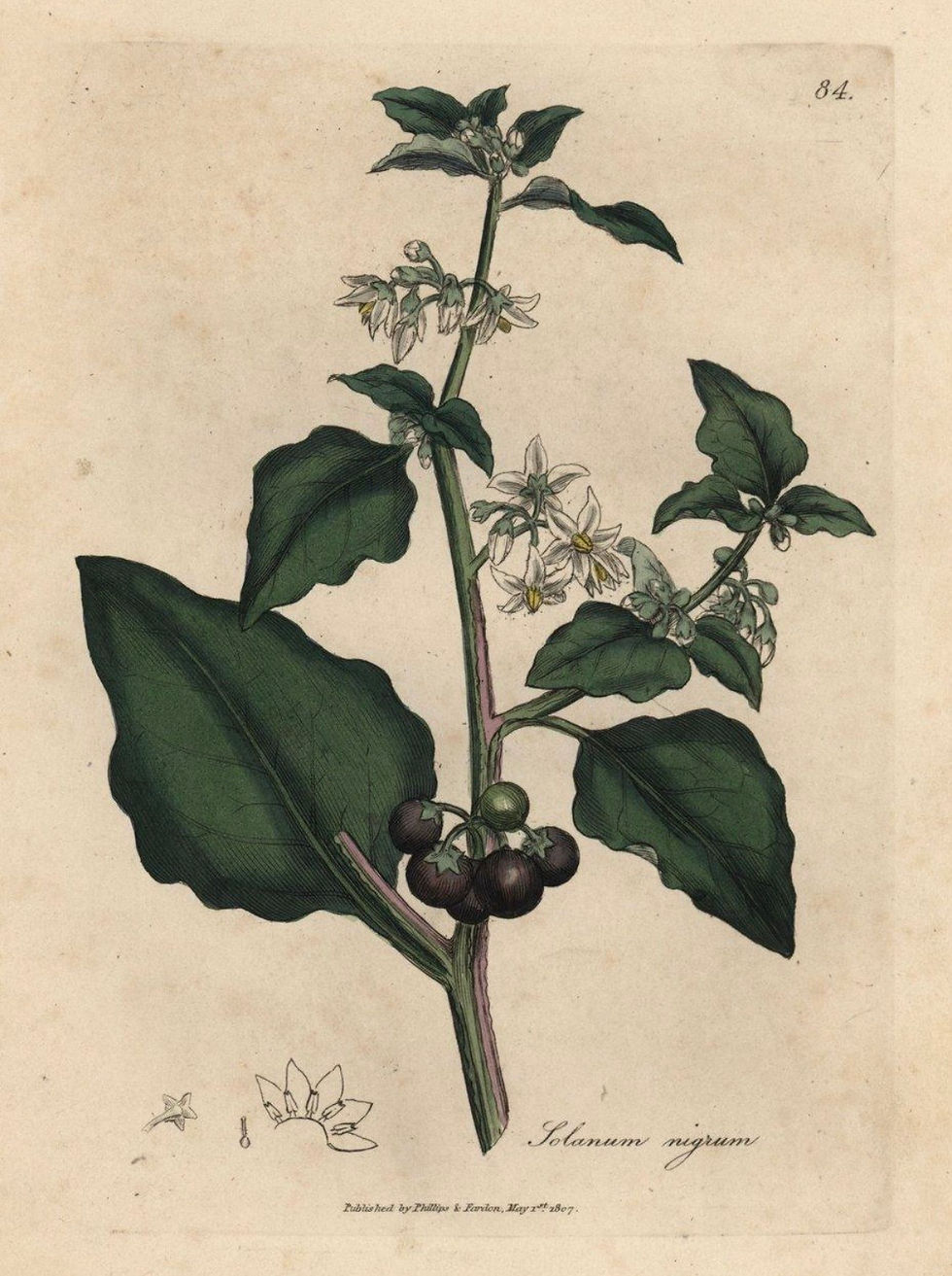
Black Nightshade: Solanum nigrum ~ Plant Identification


Plant Family & Name
a. Family: Solanaceae.
b. Botanical & Common Name: Solanum nigrum is commonly called black nightshade.
Habitat & Ecological Role
An annual or short-lived plant occurring in disturbed ground, gardens, fields, and roadsides.
Parts Used
Historically, leaves, berries, and other aerial parts have been used in different traditions.
Herbal Actions
Historically described as:
Anti-inflammatory
Analgesic
Antipyretic
Diuretic
Season
Typically flowers during the warmer growing season and develops small berries afterward.
Energetic Qualities
Traditionally regarded as cooling and soothing.
Indications
Historical applications included:
Skin inflammation
Fever
Pain
Inflammatory conditions
Body System Affinities
Integumentary system
Musculoskeletal system
Urinary system
Safety
Solanum nigrum contains steroidal glycoalkaloids, including solanine, solamargine, and solasonine. Toxicity is an important concern, particularly with improperly identified or highly concentrated plant material.
Continue Exploring October in the Apothecary
Poisonous Plants, Medicine & Myth
Old plants, strange histories, medicine, mythology, folklore, and the stories humans have woven around the botanical world.
Haunted Trails & Forgotten Places
Old paths, forgotten places, local history, and the stories that linger in landscapes long after the people have gone.
More October stories will be added throughout the month.


Comments